
Choosing LED lighting involves more than finding a fixture that fits a ceiling. The color of the light influences how finishes appear, how welcoming a room feels, and how comfortably people use the space. A thoughtfully specified system brings those considerations together with energy performance and architectural integration.
At Goldeneye Lighting, we approach lighting from the materials up. Our family-owned, U.S.-based company manufactures Airelight® ceramic luminaires in California, offering architects, designers, and contractors a distinctive alternative to conventional lighting.
This guide explains LED temperature, provides an LED light color chart, and explores the benefits of LED systems so you can make informed decisions for your next project.
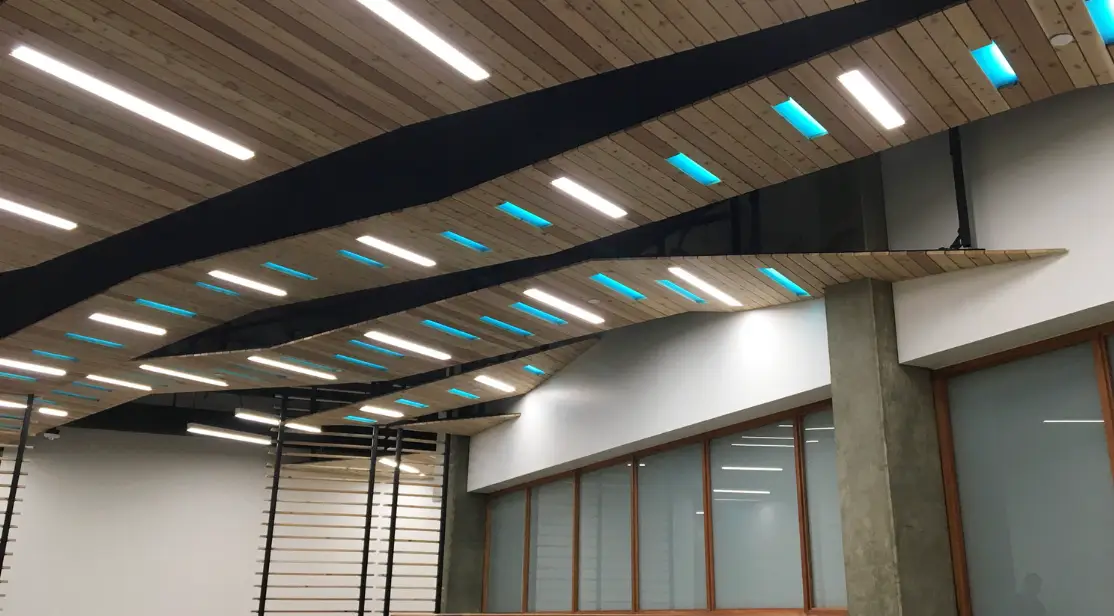
Airelight™ Linear ES 0.5 4000K CCT Surface Mounted with Airelight™ U Channel Behind Blue Glass
What Does LED Temperature Mean?
LED color temperature describes whether white light appears warm, neutral, or cool. It is expressed as correlated color temperature, or CCT, and measured in kelvin, abbreviated K.
Lower numbers generally indicate warmer light with a golden appearance. Higher numbers indicate cooler white light that may look more blue.
For example, 2700K typically feels warm and familiar, while 4000K produces a crisper white appearance. Neither is universally better. The right choice depends on the room’s purpose, materials, daylight, and desired atmosphere.
Color Temperature Is Different From Brightness
A common misconception is that a higher Kelvin rating means brighter lighting. Brightness and color temperature are separate specifications.
Lumens describe light output. Illuminance, commonly measured in footcandles or lux, describes how much light reaches a surface. CCT describes color appearance.
A warm 3000K system can provide ample task illumination. A cool 4000K system can still leave a workspace inadequately lit if its output, distribution, or placement is unsuitable.
Likewise, LED temperature does not describe how hot a fixture becomes during operation. Thermal performance requires a separate evaluation.
LED Light Color Chart: Choosing a Starting Point
Use this LED light color chart to begin your specification discussion. These are general design starting points, rather than mandatory room assignments.
| Color temperature | Typical appearance | Common design applications |
| 2200K–2700K | Very warm to warm white | Intimate hospitality settings, residential lounges, decorative lighting |
| 3000K | Warm white | Reception areas, restaurants, residential interiors, welcoming commercial spaces |
| 3500K | Intermediate white | Offices, meeting rooms, classrooms, mixed-use interiors |
| 4000K | Cooler, crisp white | Workspaces, service areas, and task-focused commercial interiors |
| 5000K–6500K | Cool to bluish white | Selected specialized tasks where the design calls for this appearance |
The chart describes general lighting categories; it does not represent every Airelight product’s available options. Confirm CCT availability on the current specification sheet for the selected luminaire.
Before committing, review samples alongside actual finishes. White paint, wood, concrete, upholstery, and metal can look noticeably different under different sources.
How to Choose LED Lighting for Each Layer
Successful architectural lighting combines ambient, task, and accent illumination. Coordinating these layers creates a cohesive space.
Ambient Lighting: Establish the Overall Atmosphere
Ambient lighting provides general illumination for circulation and everyday activities.
Warm white light around 2700K or 3000K is often a useful starting point for welcoming spaces. Offices and multipurpose environments may warrant consideration of 3500K or 4000K.
Evaluate ceiling height, surface reflectance, daylight, and fixture distribution together. A well-lit space needs more than an appropriate Kelvin number; it also needs comfortable light levels and controlled glare.
Task Lighting: Support the Work
Task lighting helps people read, prepare materials, examine details, or complete other focused activities.
Choose output and placement around the actual task. Avoid assuming that cooler light automatically improves visibility. Reflections, shadows, contrast, and glare can matter as much as color temperature.
For work involving finishes, merchandise, or detailed color judgments, review color rendering specifications and evaluate a sample under realistic conditions.
Accent Lighting: Highlight Materials and Architecture
Accent lighting draws attention to selected surfaces, displays, or architectural elements.
Matching its CCT to the ambient lighting can produce a unified appearance. A deliberate difference can create contrast, but unplanned mixing may make neighboring surfaces appear inconsistent.
For integrated linear lighting, coordinate the luminous surface with ceiling joints, wall details, acoustic treatments, and sightlines early in design.
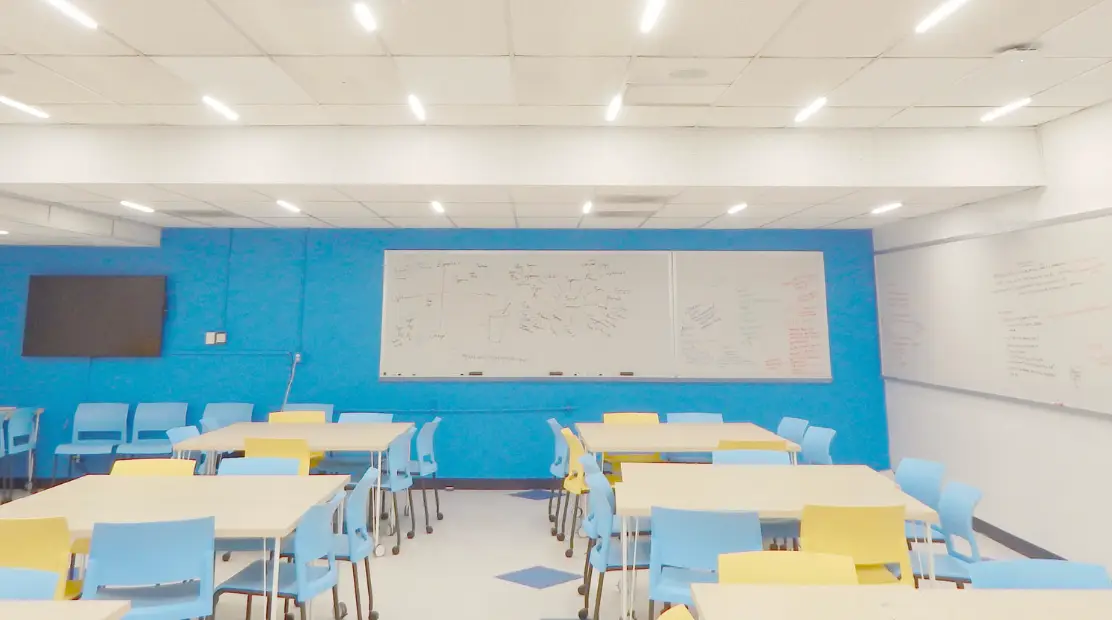
Airelight™ Linear SC 1.0 Directly Attached to T-Bar Grid 7
Look Beyond Kelvin: Color Rendering and Consistency
Two luminaires labeled 3000K may still make a room look different.
Color rendering index, or CRI, provides information about how a source renders colors relative to a reference illuminant of comparable color temperature. A high CRI can be valuable where material appearance matters, but it does not describe every aspect of light quality.
Ask about color consistency as well. Adjacent linear runs should look coordinated across a ceiling or wall. For demanding projects, discuss additional color quality data, sample availability, and consistency expectations before ordering.
Review dimming performance separately. A compatible driver and control system help deliver the intended experience; a CCT rating alone tells you nothing about dimming range or flicker.
Benefits of LED Lighting for Architectural Projects
The benefits of LED technology extend beyond replacing older lamps. A carefully selected system can improve how a building operates and how lighting fits its design. The U.S. Department of Energy identifies efficiency, color quality, light distribution, and building integration as important considerations in LED performance. Department of Energy
Energy Performance
LEDs can deliver substantial energy savings compared with older lighting technologies. Actual savings depend on the equipment being replaced, required light levels, operating hours, and controls.
Compare complete system power and delivered illumination. An occupancy sensor, appropriate scheduling, or daylight-responsive control can reduce unnecessary operation when properly designed.
Reduced Maintenance
Long service life can reduce replacement frequency and maintenance disruption. That is especially useful in occupied commercial spaces or areas that are difficult to access.
However, evaluate the entire system, including drivers, operating conditions, service access, and warranty terms. An LED’s rated life does not guarantee that every component will last equally long.
Architectural Flexibility
Compact LED sources create opportunities for unobtrusive lighting integrated into building surfaces.
This flexibility supports designs where light defines the architecture without requiring a visually dominant fixture. Successful integration still depends on installation details, electrical coordination, and future service access.
Why Goldeneye Uses Ceramic LED Technology
At Goldeneye, our patented Airelight platform uses a ceramic emitting surface that also serves as the heat sink. Our ceramic luminaires eliminate plastic from the fixture, supporting an approach centered on material selection and compact construction.
Manufactured in California, Airelight products offer options for embedding or blending lighting into ceilings, walls, cabinets, and architectural systems. LED Ceramic & Sustainable LED Lights
Ceramic thermal management is part of that design. LEDs still generate heat, so installation conditions and published operating limits remain important.
For sustainability-focused specifications, consult the selected product’s current material disclosures and supporting documentation. Evaluate the complete installation—including power supplies and accessories—against your project requirements.
Our goal is to help you select lighting that supports the architecture, material priorities, and practical requirements of the space.
Specifying LED Lighting in San Diego
For teams researching LED lighting San Diego projects, early coordination can make product selection and pricing more straightforward.
A coastal hospitality interior, commercial renovation, or office project may involve very different lighting priorities. Start with the intended experience, then translate that into measurable specifications.
Before requesting pricing, gather:
- Project location, building use, and anticipated schedule.
- Drawings showing fixture locations and approximate run lengths.
- Preferred CCT and color rendering requirements.
- Required light levels and available photometric criteria.
- Mounting surfaces, ceiling details, and service access.
- Proposed controls, dimming requirements, and power supply locations.
Ask the design team to verify applicable California energy code requirements for the specific project. Product selection and control coordination should support that review.
Contact a Goldeneye sales representative to discuss your plans and request a quote.
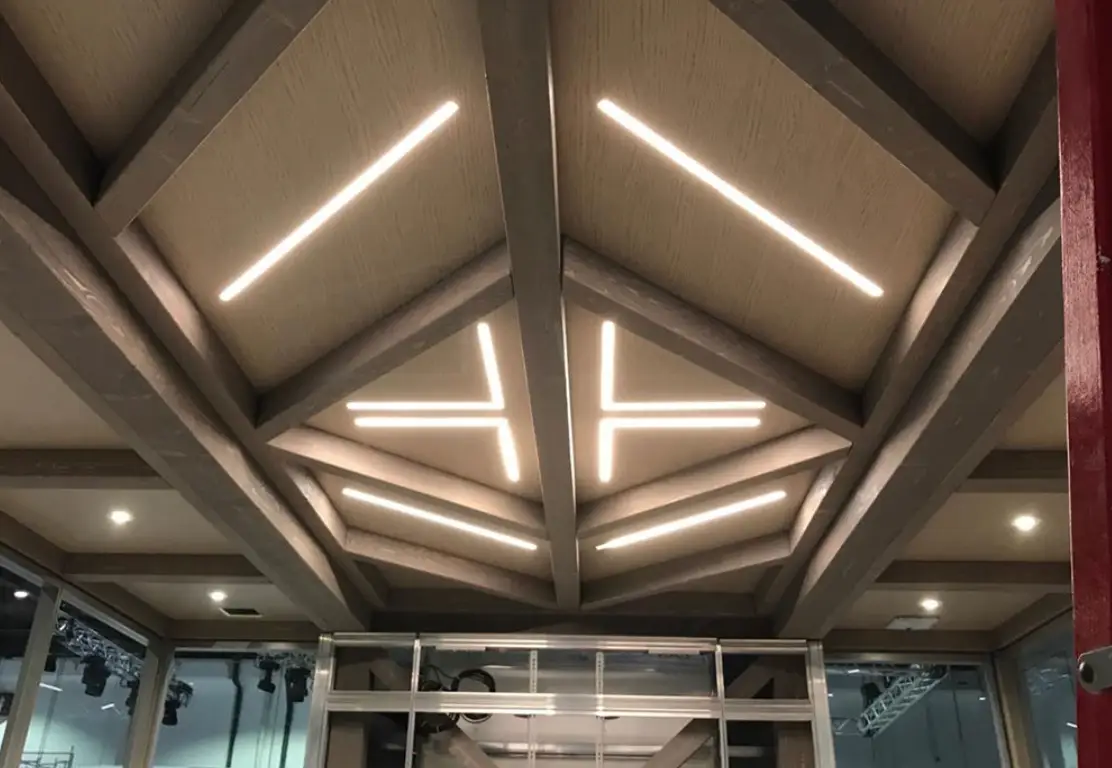
Airelight™ Linear ES 1.0 3000K CCT Embedded in Wood Veneer
Frequently Asked Questions About LED Temperature
Is 3000K or 4000K Better?
3000K typically provides a warmer appearance, while 4000K looks crisper. Compare both against the room’s finishes, daylight, and intended use before deciding.
Does a Higher Kelvin Number Mean More Heat?
No. Kelvin describes light color appearance. Fixture heat depends on electrical power, thermal design, ambient conditions, and installation.
Can Different Color Temperatures Be Used Together?
Yes, when the differences serve a clear design purpose. Review transitions and mockups to avoid distracting mismatches between adjacent spaces or lighting layers.
Request a Quote for Your Next Lighting Project
The right LED lighting combines appropriate color temperature, comfortable illumination, thoughtful material choices, and dependable system coordination.
Goldeneye Lighting helps architects, designers, and contractors explore ceramic lighting for integrated architectural applications.
Request a quote or add Goldeneye to your next project’s bid list. Call [877.298.0092 (line 8772980092)] (tel:8772980092) or email info@goldeneyelighting.com to start the conversation.