
Architectural lighting does more than make a room visible. It helps people understand a space, draws attention to the materials and forms that define it, and supports the way the environment is meant to function. In a successful design, the light and the architecture feel inseparable.
That principle guides our work at Goldeneye Lighting. From our facility in Carlsbad, California, our family-owned company designs and manufactures the patented Airelight® platform: fully ceramic LED luminaires engineered without plastic in the fixture. The result is a distinctive alternative to conventional commodity products—one created for clean integration, efficient performance, and long-term design value.
Whether you are developing a workplace, laboratory, education facility, hospitality space, residence, or acoustical ceiling concept, the right architectural lighting systems can support both the visual idea and the practical requirements of the project. This guide explains what architectural lighting is, how it is used, and what to consider when specifying a solution.
Planning an upcoming project? Contact a Goldeneye Lighting sales agent to request a quote or add Goldeneye to your bid list. You can also call 877.298.0092 or email info@goldeneyelighting.com.
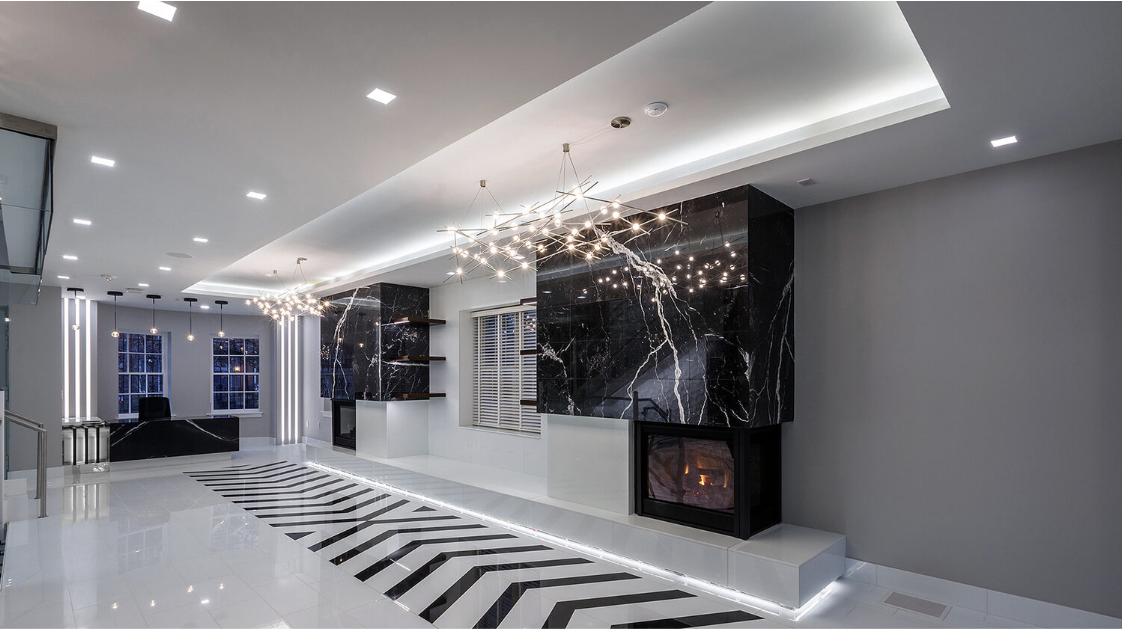
Airelight™ Square 4.0 Installed with Mud In Trim Kit
What Is Architectural Lighting?
Architectural lighting is the intentional use of light to support a building’s form, materials, function, and atmosphere. Rather than treating fixtures as isolated objects, the designer considers how illumination interacts with ceilings, walls, structure, millwork, circulation paths, furnishings, and daylight.
This discipline sits at the intersection of architecture, interior design, engineering, and lighting technology. It balances several goals at once:
- Providing useful illumination for the tasks performed in the space
- Revealing architectural details, textures, and surfaces
- Establishing hierarchy and guiding movement
- Supporting visual comfort and the desired atmosphere
- Integrating with controls, energy targets, and project requirements
- Preserving a clean and cohesive architectural expression
The best architectural lights do not compete with the space. They reinforce its proportions, rhythm, and material palette. In some applications, the luminaire may become a strong visual feature. In others, the lighting is most successful when the source virtually disappears and the architecture appears to emit light.
Architectural Lighting Versus General Lighting
General lighting provides a functional baseline of illumination. Architectural lighting goes further by coordinating that light with the building itself. A conventional ceiling fixture may brighten an office adequately, but an architectural approach asks additional questions: Should the light follow the ceiling grid? Should it be embedded in wood or drywall? Should it emphasize a structural bay, soften an acoustic system, or draw visitors toward a destination?
The distinction is not simply decorative. Integrated lighting can improve clarity, reinforce the design concept, reduce visual clutter, and help one system serve several aesthetic and functional objectives.
Why Architectural Lights Matter
People perceive architecture through light. Illumination affects the apparent scale of a room, the depth of a textured wall, the warmth of wood, and the visual weight of a ceiling. It can make an environment feel calm and expansive, focused and energetic, or dramatic and intimate.
For architects, designers, engineers, contractors, and owners, well-planned architectural lights can contribute to:
A Clearer Design Story
Light helps establish what matters most. A luminous line can continue an architectural axis, grazing light can reveal texture, and carefully integrated illumination can make a material transition feel intentional. Instead of adding another competing object, the lighting becomes part of the design language.
Better Spatial Legibility
Brightness, contrast, and orientation cues help occupants understand where to enter, gather, work, and move. Lighting can define circulation paths and zones without adding physical barriers.
Visual Comfort and Useful Illumination
A compelling concept still needs to serve the people in the space. Thoughtful placement, output, color quality, shielding, and controls help balance visual impact with appropriate illumination for work, collaboration, display, or relaxation.
Cleaner Architectural Integration
Low-profile and embedded luminaires can minimize ceiling clutter and preserve the continuity of wood, drywall, acoustic elements, and other finish systems. This is especially important when the ceiling or wall is a central feature of the project.
Common Types of Architectural Lighting Systems
There is no single fixture type that defines architectural lighting. A complete strategy may combine several methods based on the geometry, materials, tasks, and desired experience.
Recessed and Embedded Linear Lighting
Linear lighting can reinforce long sightlines, trace circulation, define zones, or create a continuous visual rhythm. When embedded in a ceiling, wall, or millwork channel, it can deliver a crisp line of light with minimal visual interruption.
This technique is particularly effective in modern interiors where architects want the illumination to read as part of the surface. Goldeneye’s ceramic Airelight® luminaires are designed for low-profile integration into architectural environments, including ceilings, walls, wood systems, and acoustic applications.
Surface-Mounted Lighting
Surface-mounted luminaires are useful when recessing is impractical or when the fixture should participate in the composition. Careful alignment with structural bays, ceiling grids, or other architectural elements keeps the installation intentional rather than applied as an afterthought.
Suspended Lighting
Suspended architectural lights can lower the visual plane in tall spaces, define work areas, and provide direct or indirect illumination. They may serve as graphic elements while preserving an open ceiling or accommodating limited plenum depth.
Cove and Indirect Lighting
Cove lighting conceals the source and reflects light from an adjacent ceiling or wall. The result can make a plane feel larger and softer while highlighting edges, curves, coffers, or transitions. Successful cove lighting depends on coordinated dimensions, setbacks, output, and surface reflectance.
Wall Grazing and Uplighting
Grazing places light close to a textured surface so that highlights and shadows reveal depth. Uplighting directs attention toward ceilings, beams, arches, or vertical forms. Both techniques can transform structural and material details into focal points.
What to Look for in Architectural LEDs
LED technology gives design teams considerable flexibility, but the words “LED fixture” alone do not indicate how well a product will perform or integrate. When comparing architectural LEDs, evaluate the complete luminaire and its suitability for the application.
Integration With the Architecture
Start with the visual intent. Consider aperture size, mounting condition, joinery, channel details, alignment, service access, and coordination with surrounding trades. Early collaboration helps prevent compromises late in construction.
Light Quality and Output
Review the appropriate lumen output, distribution, correlated color temperature, color rendering, and dimming behavior for the space. Samples or mockups can help the team evaluate how the light interacts with actual finishes.
Thermal Design and Material Selection
Heat management influences LED performance and longevity. Material choices also affect the environmental profile and physical character of a luminaire. Goldeneye rethought this relationship at the material level: Airelight® uses a patented, solid-state ceramic platform that runs cooler and eliminates plastic from the fixture.
Controls and Electrical Coordination
Confirm driver location, control protocol, dimming range, zoning, emergency requirements, and access needs. Architectural lighting systems work best when lighting, controls, electrical design, and architectural details are coordinated as one package.
Documentation and Manufacturer Support
Specification sheets, photometric files, installation information, and responsive project support help design and construction teams move from concept to completed installation. Domestic design and manufacturing also allow Goldeneye to maintain tighter quality control and provide faster, more direct support than is often available from mass-market suppliers.
A Different Material Approach to Architectural Lighting
Many conventional LED products rely heavily on plastic components. Goldeneye Lighting takes a fundamentally different approach. Our Airelight® platform uses a fully ceramic light emitter and is designed and built in the United States.
That material innovation offers architects and specifiers a compelling combination:
- Plastic-free fixture construction: A material-conscious alternative for teams seeking to reduce reliance on plastics and avoid commodity sameness.
- Efficient thermal performance: Ceramic technology supports effective heat management, helping the LED system run cooler.
- Low-profile integration: The slim form supports embedded and blended applications in ceilings, walls, cabinetry, wood, and acoustic systems.
- Domestic manufacturing: U.S.-based production in Carlsbad enables close quality oversight and accessible project support.
- Distinctive design flexibility: Airelight® can become part of an architectural detail instead of forcing the architecture to work around a conventional fixture.
For teams pursuing thoughtful material selection and seamless visual integration, this is more than a fixture substitution. It is an opportunity to reconsider how the light source relates to the architecture from the beginning.
Architectural LED Project Highlight: Vertex Pharmaceuticals
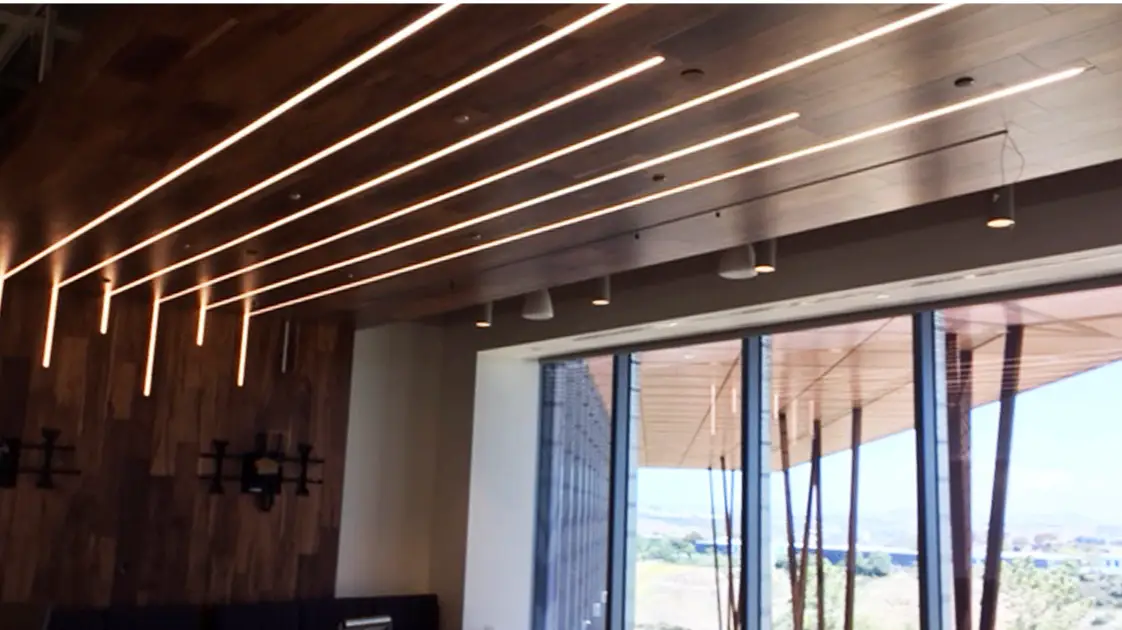
Airelight™ Linear ES 1.0 3500K Magnetically Attached to Embedded Channel with Diffuser
The Vertex Pharmaceuticals project demonstrates how architectural LEDs can blend into a finish while still producing a powerful visual effect.
In this newly completed, state-of-the-art biotech laboratory and research facility, Airelight™ Linears were embedded in channels within wood surfaces. The installation allows the light to follow the geometry of the architecture and blend naturally with the surrounding material. When illuminated, the linear elements create a dramatic contemporary expression and deliver the desired lumen output without introducing bulky fixtures that would interrupt the design.
The project specified Airelight™ Linear ES 1.0 LED Ceramic Luminaires, demonstrating how a low-profile ceramic luminaire can support a refined, integrated result in a demanding commercial environment.
Specifier: DGA – Dowler Gruman Architects
Application: Commercial biotech laboratory and research facility
Installation type: Embedded in wood
Product: Airelight™ Linear ES 1.0
Suggested image alt text for project photos: “Airelight Linear ES 1.0 architectural LED lighting embedded in wood at Vertex Pharmaceuticals.”
LED Lighting in San Diego, Designed and Made for Projects Nationwide
For project teams searching for LED lighting San Diego, Goldeneye offers the benefit of a local Southern California manufacturer with nationwide reach. Our Carlsbad location supports direct communication with the people behind the technology while our network of sales agents helps architects, engineers, lighting designers, contractors, and owners across the United States.
Local manufacturing is especially valuable when a project requires technical coordination or a lighting concept that differs from standard catalog solutions. The closer relationship among product development, manufacturing, and support can help teams evaluate integration details, access technical information, and specify with greater confidence.
Goldeneye is family-owned, but our point of view is forward-looking: better architectural lighting can begin with better materials. By combining ceramic construction, efficient LED performance, and understated integration, Airelight® gives design professionals an alternative to conventional fixture forms.
How to Plan Architectural Lighting for Your Next Project
The best time to coordinate lighting is early—before ceiling systems, millwork, power locations, and control zones are fixed. A productive specification process typically includes these steps:
- Define the experience. Identify the architectural elements to reveal and how occupants should feel and move through the space.
- Establish performance needs. Determine required output, distribution, color quality, dimming, controls, and applicable project criteria.
- Coordinate the details. Align apertures, channels, drivers, wiring, access, finish transitions, and installation responsibilities.
- Review product documentation. Use specification sheets, photometric data, samples, and mockups as appropriate.
- Engage the manufacturer. Discuss the application early enough to protect the design intent and avoid preventable field conflicts.
Goldeneye’s team can help you explore where ceramic luminaires fit within your design and connect you with the appropriate regional representative. Find your Goldeneye sales agent and request pricing, technical assistance, or support for an upcoming specification.
Frequently Asked Questions About Architectural Lighting
What is the purpose of architectural lighting?
Architectural lighting provides illumination while supporting the form, materials, function, and atmosphere of a building. It can reveal details, organize space, guide movement, and make lighting feel integrated with the architecture.
What are examples of architectural lights?
Examples include recessed or embedded linear luminaires, surface-mounted fixtures, suspended lighting, coves, wall grazers, uplights, and lighting integrated into wood, ceilings, walls, cabinetry, or acoustic systems.
Why use LEDs for architectural lighting systems?
LEDs can offer efficient operation, compact form factors, controllability, and a range of output and color options. These qualities make them well suited to precise, low-profile architectural integration when the complete luminaire is properly designed and specified.
What makes ceramic architectural LEDs different?
Ceramic can serve both as a structural material and as part of an effective thermal design. Goldeneye’s patented Airelight® platform uses a fully ceramic light emitter, runs cooler, and eliminates plastic from the fixture, creating a differentiated option for material-conscious architectural projects.
Can Goldeneye products be embedded in wood or ceilings?
Yes. Airelight® luminaires are designed for clean, low-profile integration into surfaces and systems including wood, drywall, ceilings, walls, cabinetry, and acoustic applications. The Vertex Pharmaceuticals installation is one example of Airelight™ Linear ES 1.0 embedded in wood channels.
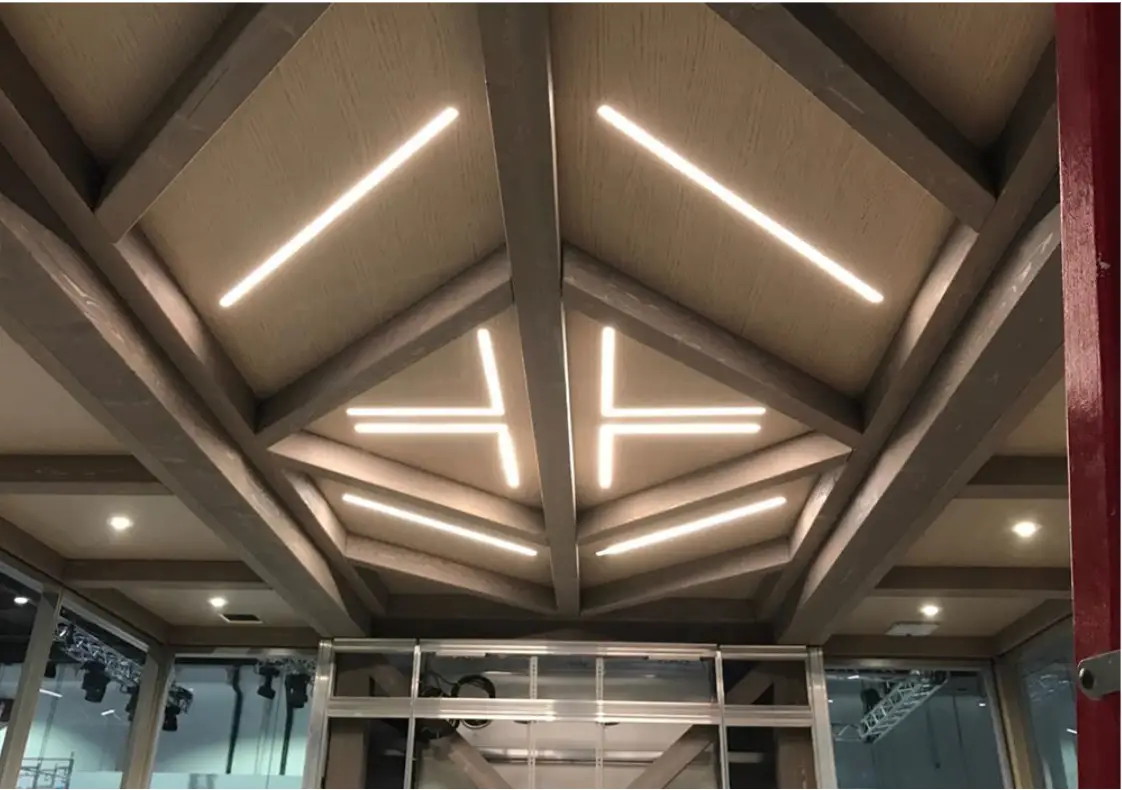
Airelight™ Linear ES 1.0 3000K CCT Embedded in Wood Veneer
Bring Your Next Lighting Concept to Life
Architectural lighting is most successful when it is considered as part of the building—not added after the design is complete. The right system should deliver useful illumination, respect the material palette, strengthen the spatial concept, and remain visually coherent over the life of the project.
Goldeneye Lighting offers a patented, fully ceramic, U.S.-made alternative for teams that want more than another commodity LED fixture. If you are evaluating architectural lights for an active project, preparing specifications, or building a bid list for future work, we would be glad to help.
Contact a Goldeneye Lighting sales agent to request a quote or add us to your bid list. Call 877.298.0092 or email info@goldeneyelighting.com.