
Understanding Architectural Lighting Works: LED Color Temperature, Ceiling Integration, and Modern Design
Lighting design is no longer just about brightness — it’s about experience, performance, and integration. At Goldeneye Lighting, we believe the way architectural lighting works should support both the visual and functional goals of a space while maintaining long-term reliability.
As a family-owned, U.S.-based manufacturer, Goldeneye Lighting develops patented fully ceramic LED lighting systems that eliminate plastic from the fixture entirely. Designed and built in Carlsbad, California, our Airelight® platform delivers a new level of thermal performance, efficiency, and architectural integration compared to commodity LED lighting products.
This article explains how LED color temperature, ceiling integration, and material innovation are reshaping lighting design — and how architects and designers can make better lighting decisions for their next project.
If you’re planning a lighting upgrade or new build, you can request a quote or add Goldeneye Lighting to your bid list here:
https://www.goldeneyelighting.com/sales-agent/
Call 877.298.0092 or email info@goldeneyelighting.com to connect with our team.
LED Color Temperature and How Architectural Lighting Works
Most people are familiar with lighting described as “warm” or “cool,” but in architectural design, color temperature plays a critical role in how lighting works within a space.
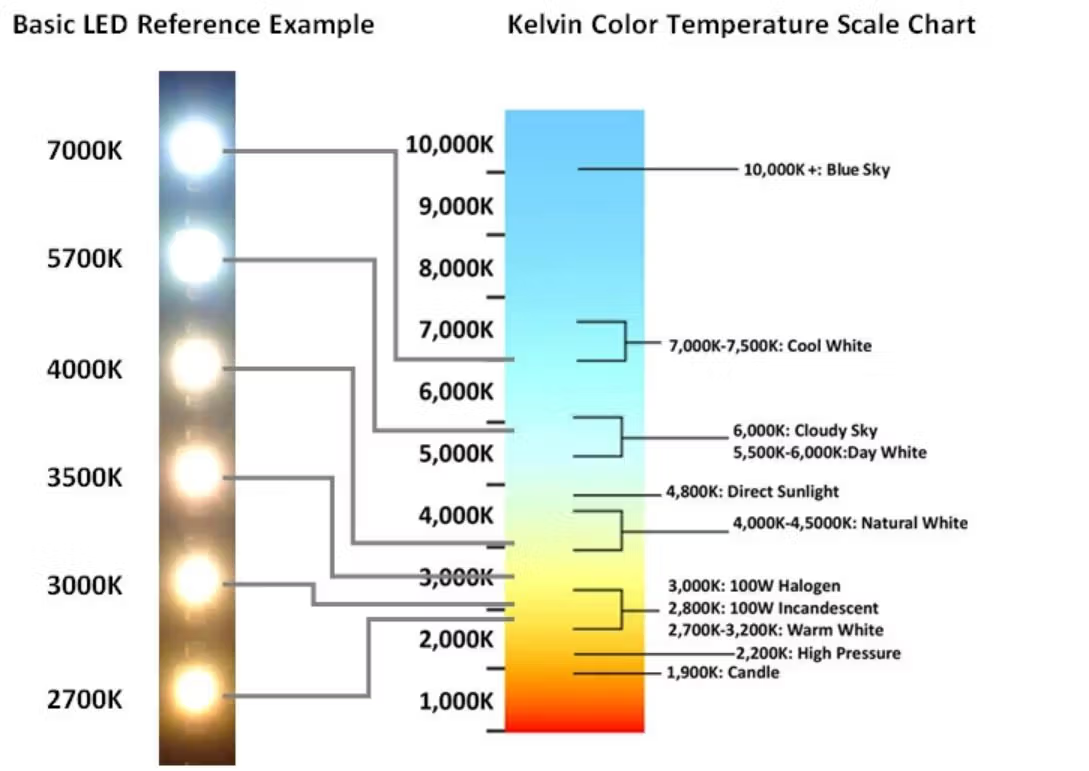
LED light sources are measured using the Kelvin (K) scale, which defines the visual warmth or coolness of white light.
Typical ranges include:
- 2700K–3000K: Warm white lighting
- 3500K: Neutral white
- 4000K–5000K: Cool white lighting
At Goldeneye Lighting, many of our architectural fixtures operate within the 2500K–3000K range, delivering comfortable warm illumination that supports hospitality, workplace, residential, and commercial environments.
Warm lighting tends to feel inviting and relaxed, while cooler lighting promotes alertness and clarity. Understanding this balance is essential when designing modern ceiling and lighting systems.
But color temperature is only one piece of the architectural lighting equation.
LED in Ceiling Lighting: Designing with Integration in Mind
One of the biggest shifts in modern lighting design is the rise of LED in ceiling lighting systems that integrate directly into architectural surfaces.
Traditional lighting fixtures often forced designers to compromise due to:
- Bulky housings
- Heat buildup
- Limited placement flexibility
- Short fixture lifespans
LED technology removed many of these barriers. Goldeneye Lighting’s ceramic LED platform pushes that progress even further.
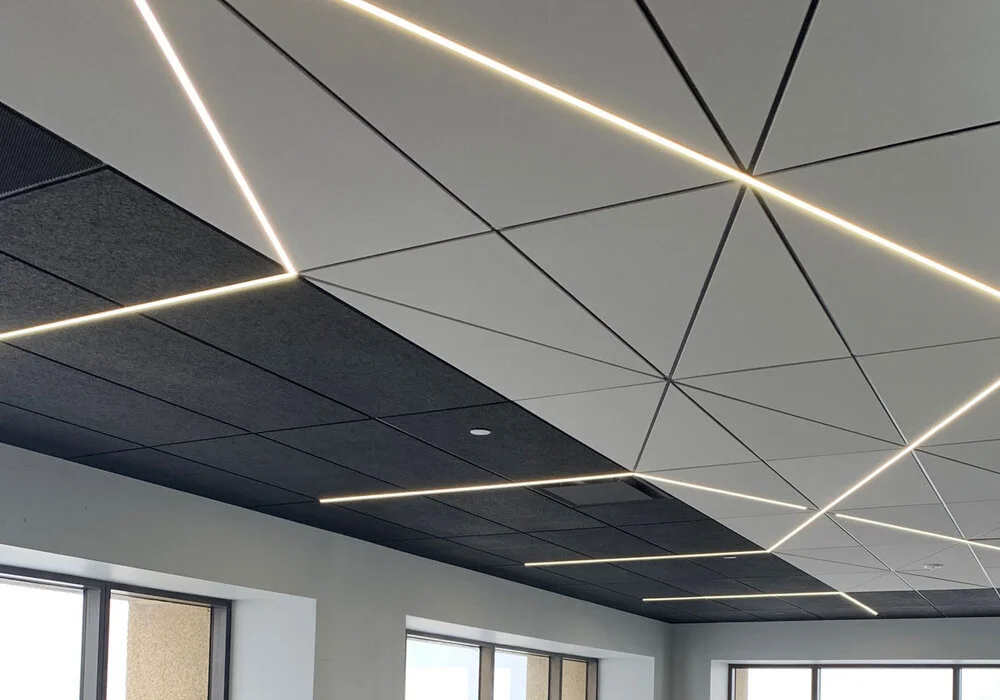
Our solid-state ceramic LED technology runs cooler, uses less energy, and supports ultra-low-profile installations, making it ideal for ceiling-integrated applications such as:
- Linear ceiling lighting
- Acoustic ceiling integration
- Cove lighting
- Architectural soffits
- Flush-mount systems
Because our fixtures eliminate plastic components, they maintain appearance and performance over time — something critical in ceilings where maintenance access may be limited.
This approach reflects a broader industry trend: lighting is no longer added to architecture — it is designed into it.
Lights for Recessed Lighting in Modern Architecture
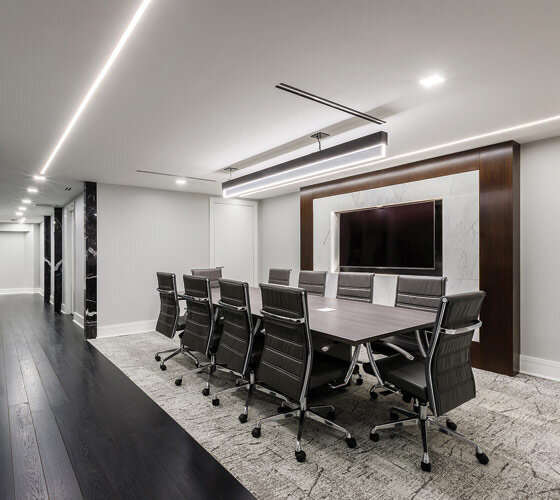
Recessed lighting remains one of the most widely used architectural lighting strategies, but today’s lights for recessed lighting must meet higher expectations than ever before.
Architects and designers now prioritize:
- Thermal performance
- Fixture longevity
- Visual consistency
- Energy efficiency
- Clean ceiling aesthetics
Goldeneye Lighting’s ceramic LED modules are engineered specifically for recessed applications where heat management and reliability matter most.
Ceramic substrates transfer heat more efficiently than plastic-based LED assemblies, which helps maintain lumen output and fixture performance over time.
The result is recessed lighting that supports architectural intent rather than competing with it.
This is especially important in environments where ceilings are part of the visual design language — including corporate interiors, healthcare facilities, education buildings, and hospitality spaces.
LED Replacement for Fluorescent Lamps in Commercial Environments
Another major transition happening across commercial buildings is the LED replacement for fluorescent lamps.
Fluorescent lighting has served offices, schools, and public buildings for decades, but it comes with limitations:
- High energy consumption
- Mercury content
- Frequent maintenance
- Heat generation
- Flicker and color inconsistency
LED technology provides a better solution.
Replacing fluorescent systems with LED lighting delivers:
- Lower energy costs
- Longer fixture life
- Improved color rendering
- Reduced maintenance
- Compatibility with smart controls
Goldeneye Lighting approaches fluorescent replacement differently than commodity LED manufacturers. Rather than simply swapping light sources, we focus on improving fixture performance and architectural integration.
Our ceramic LED systems provide consistent illumination, better thermal management, and long-term reliability — making them ideal for retrofit projects where durability matters.
Ceiling and Lighting Design Is Becoming One System
Architectural lighting is moving toward a future where ceiling and lighting systems are designed together, not separately.
LED technology makes this possible because of:
- Low-heat operation
- Compact fixture design
- Long service life
- Integration flexibility
Goldeneye Lighting’s Airelight® platform was designed with this integration in mind. Our fixtures can be incorporated into ceilings, walls, and acoustic systems without bulky housings or visible plastic components.
This enables:
- Cleaner architectural lines
- More uniform illumination
- Reduced maintenance requirements
- Long-term aesthetic consistency
For architects and designers, this means lighting can support the architecture rather than interrupt it.
What Makes Goldeneye Lighting Different
Goldeneye Lighting was built around a simple idea: better materials create better lighting.
Unlike mass-market LED fixtures built with plastic housings, Goldeneye uses fully ceramic LED construction to improve performance and durability.
Goldeneye Lighting is:
- Family-owned and U.S.-based
- Designed and manufactured in Carlsbad, California
- Focused on patented ceramic LED technology
- Built for long-term reliability
- Engineered for architectural integration
Ceramic LED systems run cooler, maintain color consistency longer, and support low-profile installations that align with modern architectural design.
This materials-first approach allows Goldeneye Lighting to deliver a sustainable, high-performance alternative to commodity lighting products.
Bringing Architectural Lighting Into the Future
The future of architectural illumination depends on more than just energy efficiency. It requires lighting systems that integrate seamlessly into architecture while delivering long-term reliability and visual consistency.
Goldeneye Lighting continues to push this evolution forward through ceramic LED innovation and domestic manufacturing.
Whether you’re designing new construction, upgrading a facility, or planning a lighting retrofit, Goldeneye Lighting can help.
Start Your Next Lighting Project with Goldeneye
If you’re planning a project involving:
- Architectural lighting works
- LED in ceiling lighting
- Lights for recessed lighting
- LED replacement for fluorescent lamps
- Integrated ceiling and lighting systems
We’d love to work with you.
Request a quote or add Goldeneye Lighting to your bid list:
https://www.goldeneyelighting.com/sales-agent/
Call 877.298.0092
Email info@goldeneyelighting.com
Goldeneye Lighting — where material innovation meets architectural performance.